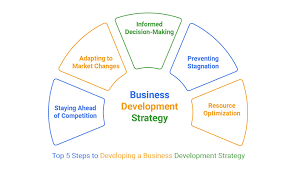
A strong business development strategy is the foundation of any successful company. It helps you identify opportunities, attract customers, grow revenue, and stay competitive in a constantly changing market. Whether you’re launching a new startup or scaling an established brand, having a clear plan can turn your business goals into real results.
Here are 10 essential tips to help you create a powerful and effective business development strategy.
1. Define Your Business Goals
Every successful strategy begins with clear goals. Before planning, ask yourself:
- What do you want to achieve?
- Do you want more leads? Higher sales? New markets?
- How fast do you want to grow?
Set SMART goals – Specific, Measurable, Achievable, Relevant, and Time-bound – to give your strategy direction and purpose.
2. Understand Your Target Audience
Knowing who your customers are is key to creating a strategy that works. Identify their:
- Needs
- Preferences
- Pain points
- Buying behavior
Use market research, surveys, and customer feedback to gain insights. The more you understand your audience, the better you can serve them.
3. Analyze Your Competition
Your competitors can teach you a lot. Study their strengths, weaknesses, pricing, and marketing techniques. This helps you:
- Identify gaps in the market
- Discover opportunities
- Position your business more effectively
A competitive analysis gives you an edge when building your strategy.
4. Develop a Clear Value Proposition
Your value proposition explains why customers should choose you over others. It should highlight:
- What makes your business unique
- The benefits you offer
- How you solve customers’ problems
A strong value proposition improves marketing, sales, and brand trust.
5. Choose the Right Business Development Channels
Not every platform or method will work for your business. Select the channels that best reach your audience.
Common channels include:
- Social media
- Email marketing
- Networking events
- Industry partnerships
- Content marketing
- Paid advertising
Focus on the ones that give the highest return.
6. Build Strong Customer Relationships
Business development is not only about finding new customers it’s also about keeping existing ones. Loyal customers often bring repeat purchases and referrals.
Strategies to strengthen relationships:
- Offer excellent customer service
- Stay active on social media
- Personalize communication
- Respond to feedback
Happy customers are your best promoters.
7. Create Engaging and Useful Content
Content marketing is one of the most effective tools for business growth. High-quality content helps you establish authority and attract potential customers.
Content ideas include:
- Blog posts
- Videos
- Case studies
- Webinars
- E-books
Valuable content builds trust and drives traffic to your business.
8. Track and Measure Your Performance
A strategy is only effective if you measure its results. Use analytics tools to track your progress and performance.
Key metrics to monitor:
- Website traffic
- Conversion rates
- Lead generation
- Customer retention
- Sales growth
Regular analysis helps you improve and adjust your strategy.
9. Stay Flexible and Adapt to Change
Markets, technology, and customer behavior change quickly. Your business development strategy should be flexible enough to adapt.
Stay updated with:
- Industry trends
- New tools
- Customer feedback
- Competitor movements
A strong strategy grows and evolves with your business.
10. Invest in a Skilled Business Development Team
People are the heart of any strategy. Build a team with the right skills and mindset.
Look for individuals who:
- Think creatively
- Communicate well
- Understand customer needs
- Are skilled in sales and marketing
A talented team can bring your entire strategy to life.
Final Thoughts
Creating a strong business development strategy takes time, research, and careful planning, but the rewards are worth it. By setting clear goals, knowing your audience, delivering value, and staying adaptable, you can create a roadmap that leads to long-term business success.