About This Article
Discover how the best indoor plants for air purification can improve your home’s air quality and your health at the same time. Learn more below.
Introduction
The air inside your home might be more dirty than outside air. Many homes have dust, pet hair, mold, and cleaner chemicals that build up indoors. The best indoor plants clean the air quietly by filtering out these bad things. They’re nice to look at, but they’re also hard workers that clean the air you breathe every day.
The air inside shapes how you feel, your energy, and your sleep. When you’re inside most of the time, the air you breathe affects everything. Plants clean the air naturally without costing a lot of money or using extra power. People have used them for hundreds of years, and they work just as well today.
Table of Contents
Understanding Indoor Air Quality
Indoor air quality means how clean or dirty the air is inside your home or workplace. Dust, gases, bacteria, and tiny bits float around your space. When windows stay closed, bad stuff builds up and the air feels stale. You can open windows for fresh air, but that’s not always possible when it’s cold or polluted outside, so many people find other ways to help.
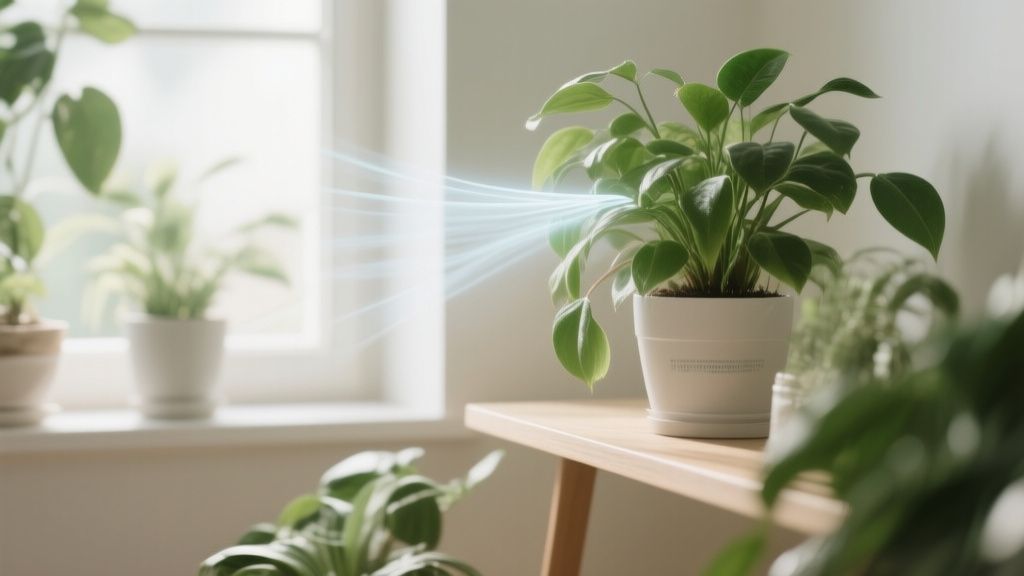
Bad indoor air often comes from furniture with formaldehyde, cleaners with benzene, and things called VOCs. These chemicals can give you headaches, allergies, and trouble breathing. You can’t see or smell bad air most of the time, so many people don’t know their home needs help. But the answer is often easier than you think.
The Role of Air Purification
Air purification means taking bad stuff out of the air. According to research on air purification, plants suck in bad gases through their leaves and break them down in the soil with help from tiny bugs and fungi. This happens all day and night without power or new filters. Plants are one of the cheapest and best ways to keep air clean.
When you pick the best indoor plants for air purification, you’re helping your health and your home look good. The plants clean quietly while you do your stuff. Both clean air and nice looks are hard to beat together.
Why Clean Air Matters at Home
Breathing clean air keeps you healthy and strong. Bad air can make your eyes hurt, give you a cough, and make you tired. Over time, bad indoor air can hurt your lungs.
Kids and older people get hurt by bad air more easily. Pets also have a hard time with bad air and may cough or sneeze. Clean air helps everyone feel better and do better because they’re breathing healthy air at home, work, or school. It’s worth the effort every single day.
Health Benefits of Purification
When your home has cleaner air, you sleep better and wake up fresh. Allergies and asthma feel better when bad stuff is gone from your space. Better air also helps you think clearer and feel happier, so it’s easier to get things done. You’ll notice these good changes within a few weeks of adding plants.
Think about someone who works from home and gets tired in the afternoon. After putting several clean-air plants around their desk, they think clearer by mid-afternoon. Headaches that used to hurt at night go away. The change is small but real, and it gets better over time as the air gets cleaner.
How Plants Filter and Purify
Plants breathe in air through tiny holes in their leaves called stomata. These openings take in carbon dioxide during the day for food-making. At the same time, bad gases and bits get pulled into the leaf and sent down to the roots. The plant breaks these down in the soil with help from tiny bugs.
The Science Behind Plant Purification
When a plant takes in formaldehyde or benzene, special parts in its leaves break apart these bad molecules. Some bad stuff becomes food, and some becomes harmless. This is called phytoremediation, and it’s one of nature’s best tricks. Plants have been doing this for millions of years with no tools or power.
Real-World Examples
Office buildings now use plants to make air better for workers. Companies put big plants in front rooms and near desks to boost how people feel and their health. Workers in offices with plants take fewer sick days and like their jobs more. The money spent on plants pays for itself through better work and less missing days.
Home Examples That Work
A family with a new baby fills their baby’s room with clean-air plants. They put the plants where the baby can’t reach them and pick kinds that won’t hurt. The baby sleeps better and gets fewer breathing problems because the air is cleaner than for the older kids. Parents feel good knowing they made a safe space for their baby.
An older person living alone puts several spider plants and snake plants in their bedroom and living room. Their old cough gets better within a month. They have more energy and breathe easier when they walk because the air is better. Friends say the apartment smells so fresh, and the plants make them feel proud and happy.
Common Mistakes to Avoid
Many people buy one plant and think it will clean their whole home. One spider plant looks nice but can’t clean a big bedroom or living room. You need several plants around your space to get real cleaning power. The more plants you have, the better they clean your air.
Giving plants too much water is the number-one way to kill them. Most people water too much and drown the roots. Stick your finger in the soil before watering, if it’s wet, wait a few more days. Most plants like to dry out between waters, and this helps them grow stronger because roots need air.
Placement and Lighting Errors
A plant that likes shade will get sick in a bright window. A plant that likes sun will grow slow in a dark corner. Read the tag before you buy and know how much light each room gets so you pick the right plant. A happy plant cleans the air much better than one that’s struggling.
Practical Tips for Readers
First, check how much light each room in your home gets. Put shade plants in bedrooms and bathrooms and sun plants by windows. This step makes sure your plants grow well and clean really hard because they’re in the right spot. A healthy plant always cleans better than a sick one.
Maintenance and Growth
Write down when you water and feed your plants. Most plants need food only in spring and summer, and much less in fall and winter. Wipe the leaves with a soft cloth once in a while so the pores stay clean. Clean leaves soak up more air and filter out more bad stuff.
Current Trends and Challenges
More people want indoor plants now because they stay home more. Plant shops say clean-air plants sell fast, and lots of new plant owners are learning how to care for them. Social media makes plants cool, which is good news for clean air in millions of homes. But all this talk has also spread wrong ideas about which plants work best.
Adapting to Modern Homes
Small apartments with dark rooms can be hard for plant lovers. The good news is that pothos and peace lilies grow well in dim rooms and small spaces. New homes often have better air flow than old ones, so plants can work faster. Picking the right plants for your spot is the trick to doing well.
Pet owners worry that plants might hurt their cats and dogs. Many clean-air plants are safe for pets, but not all of them. Check before you buy so your plants and your pets can be safe together. Websites about pet safety show which plants are bad and which are safe, so it’s easy to pick right.
Comparison Table
Different clean-air plants have different good points for your needs and home, so you should pick the right one.
Picking the right plant type for your space helps you get the most benefit because the plant will grow well and work harder to clean your air.
Frequently Asked Questions About best indoor plants for air purification
How many plants do I need to see a real difference in air quality?
A small bedroom might need just one or two, while a large living room could benefit from three to five. Start with what fits your space and then add more as you gain confidence in plant care.
Which plants are safest if I have young children or pets?
Spider plants, Boston ferns, and African violets don’t hurt kids or pets. Snake plants clean air really well but can hurt cats a little, so put them out of reach. Always check a pet-safety website before you bring a new plant home because your family’s safety matters.
Can I use these plants in rooms with very low light?
Yes, pothos, snake plant, and peace lily do well in dark rooms. They grow slower than in bright light, but they still clean your air well because they work even in dim spaces. Don’t expect them to grow as fast as plants in sunny spots.
How often should I water my air-purifying plants?
Most indoor plants need water only when the top bit of soil is dry. This usually means watering once a week or less, based on the season and how wet it is. Too much water kills plants faster than too little water, so be careful and check before you water.
Do air-purifying plants work better than mechanical air filters?
Plants and machine filters clean in different ways. Plants clean all day without power and make your space look nice. Machine filters clean faster but you have to buy new filters and use power. Many people use both to get the best results, especially if they have allergies or asthma because both work great together.
Conclusion
The best indoor plants for air purification are one of nature’s easiest fixes for a common problem. They clean your air, make you feel better, and bring life to any room. Unlike machines that need power and new filters, plants work quiet in the background because they do all the work while you live. The cost is small, and the good things that happen are real and stay.
Start today by choosing one or two hardy varieties that match your home’s light conditions. Visit a local nursery and talk to staff about plants that thrive in your space. Place them where they’ll be seen and enjoyed, and then commit to basic care like checking soil moisture and dusting leaves. Your home and your health will thank you for this simple, beautiful choice.
Expert Insight
Indoor air quality improvements happen gradually but consistently when you use a mix of plant types. Varying your selection across low-light and bright-light species, combined with proper watering and basic care, creates the most effective air-cleaning environment for your home or office.
For more help with home projects, you can look at top 8 electrical upgrades for increased energy efficiency if you also want to fix your lights or temperature control for your plants.
About The Author

